A three-node cluster kept deliberately boring — identical machines on an isolated 10 GbE segment — used only for benchmarks that need real hardware and repeatable numbers rather than a shared workstation.
Some measurements do not belong on the Kernel Workbench: they need more than one machine, or they need a host with nothing else running on it. The Bench Cluster is that environment — three identical nodes that exist to produce numbers nobody has to caveat.
Topology#
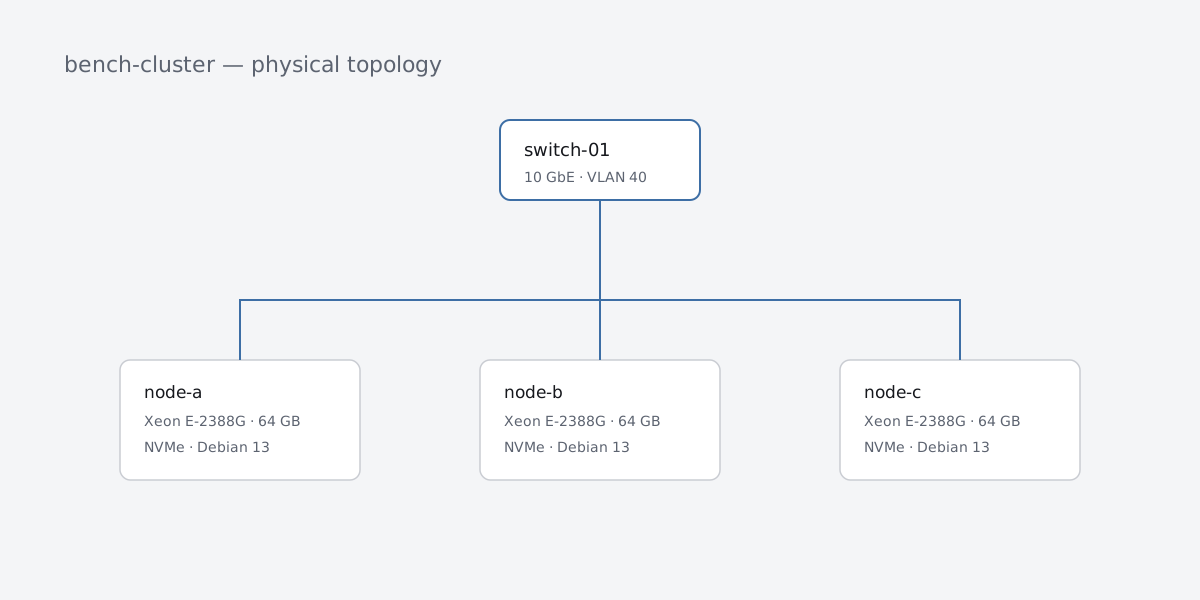
Three nodes on a single 10 GbE switch, on their own VLAN. There is intentionally nothing clever here: no shared storage, no orchestration layer, no noisy neighbours. Uniformity is the feature.
How it is used#
A benchmark is staged from the workbench, pushed to the nodes, and run with the
cluster otherwise idle. Results are pulled back and archived. Because the nodes
are identical and reimaged between campaigns, a number measured on node-a
should reproduce on node-b and node-c — and when it does not, that
divergence is itself the finding.